
6th Grade Science: Integrated Science Part 1
The Discovery Experience
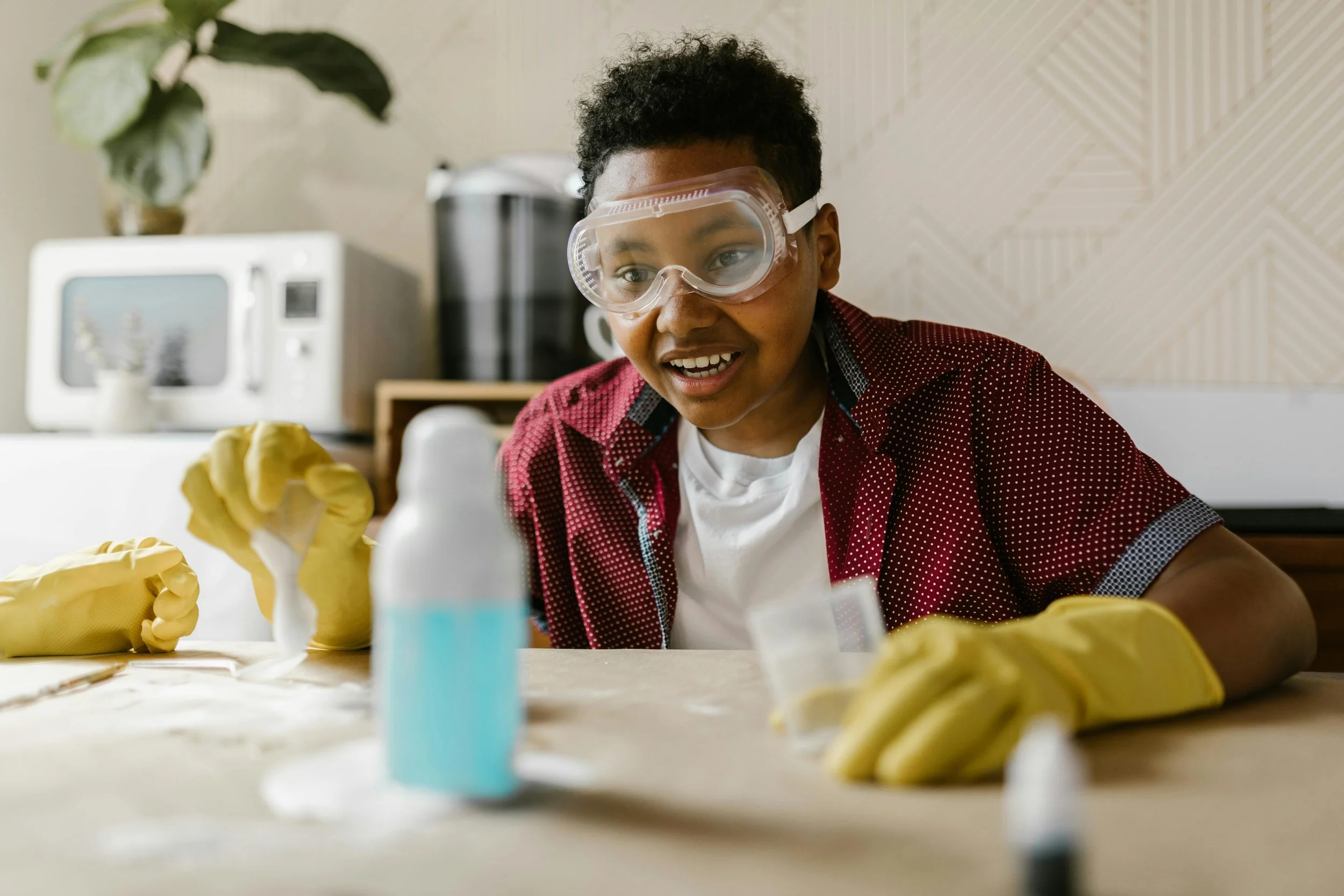
This foundational middle school course blends Earth, Life, and Physical sciences. Students begin to explore the interconnected nature of the universe by investigating observable phenomena. The course is designed to spark curiosity and build inquiry skills, guiding students through the process of engaging with a problem, exploring concepts, explaining their findings, and evaluating evidence.
-
-
Curriculum Highlights
This course introduces students to integrated scientific inquiry. By blending life, earth, and physical sciences, scholars learn how natural systems interact. Hands-on investigations and digital modeling help students understand the dynamic world around them. Students develop critical thinking skills by making observations, analyzing data, and constructing evidence-based claims. The curriculum fosters a collaborative environment where students design solutions to real-world challenges.
This course introduces students to integrated scientific inquiry. By blending life, earth, and physical sciences, scholars learn how natural systems interact. Hands-on investigations and digital modeling help students understand the dynamic world around them. Students develop critical thinking skills by making observations, analyzing data, and constructing evidence-based claims. The curriculum fosters a collaborative environment where students design solutions to real-world challenges.
-
Core Scope and Sequence
The year begins with an introduction to matter, its states, and properties. Students then transition to Earth science, exploring geologic time, the dynamic Earth, and natural hazards. Life science topics focus on ecosystems, including the flow of matter and energy, dynamic ecosystems, and biodiversity. The physical science component introduces energy, motion, and basic forces. The course emphasizes data interpretation, modeling, and scientific reasoning across all scientific disciplines.
The year begins with an introduction to matter, its states, and properties. Students then transition to Earth science, exploring geologic time, the dynamic Earth, and natural hazards. Life science topics focus on ecosystems, including the flow of matter and energy, dynamic ecosystems, and biodiversity. The physical science component introduces energy, motion, and basic forces. The course emphasizes data interpretation, modeling, and scientific reasoning across all scientific disciplines.
-